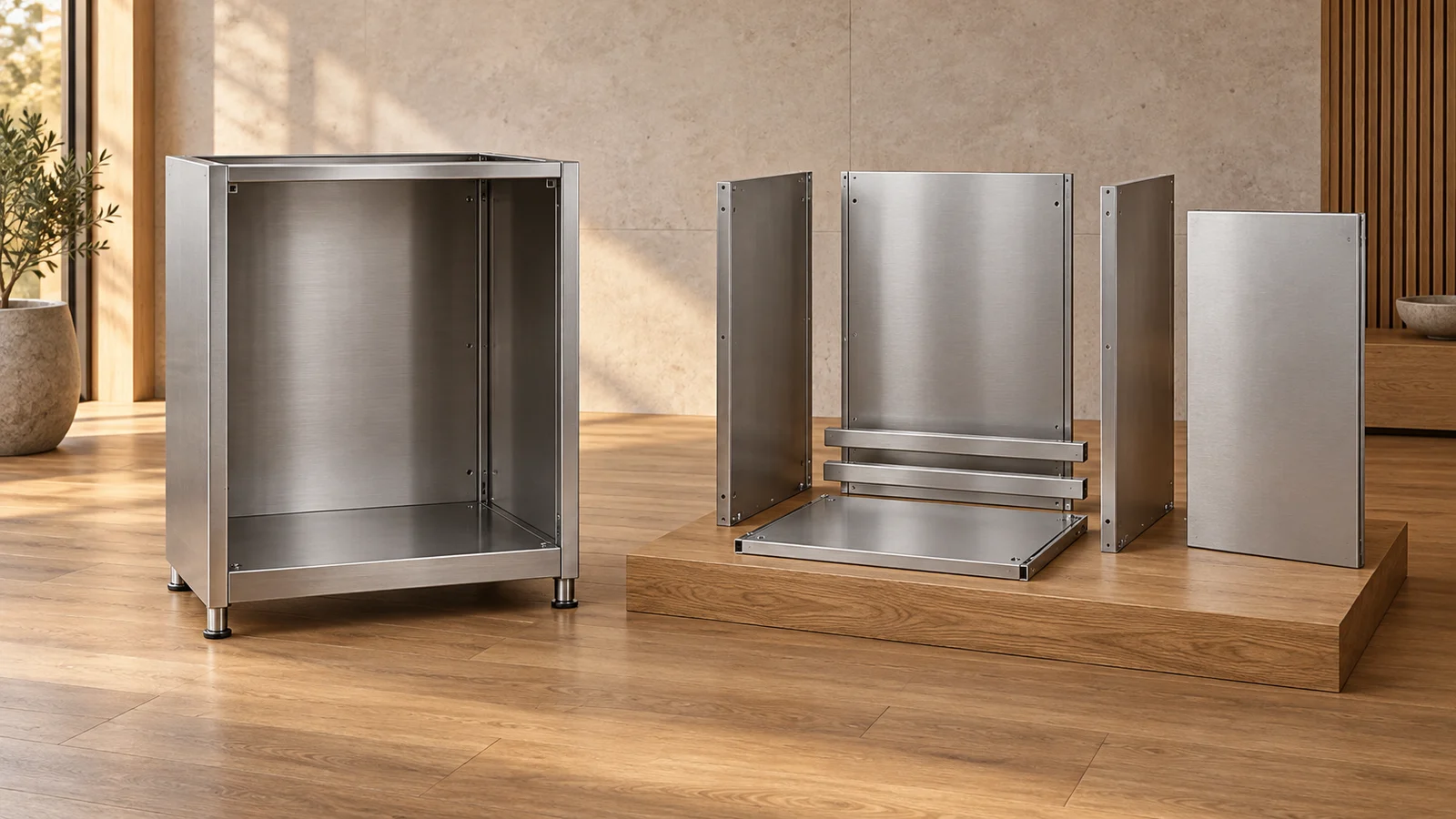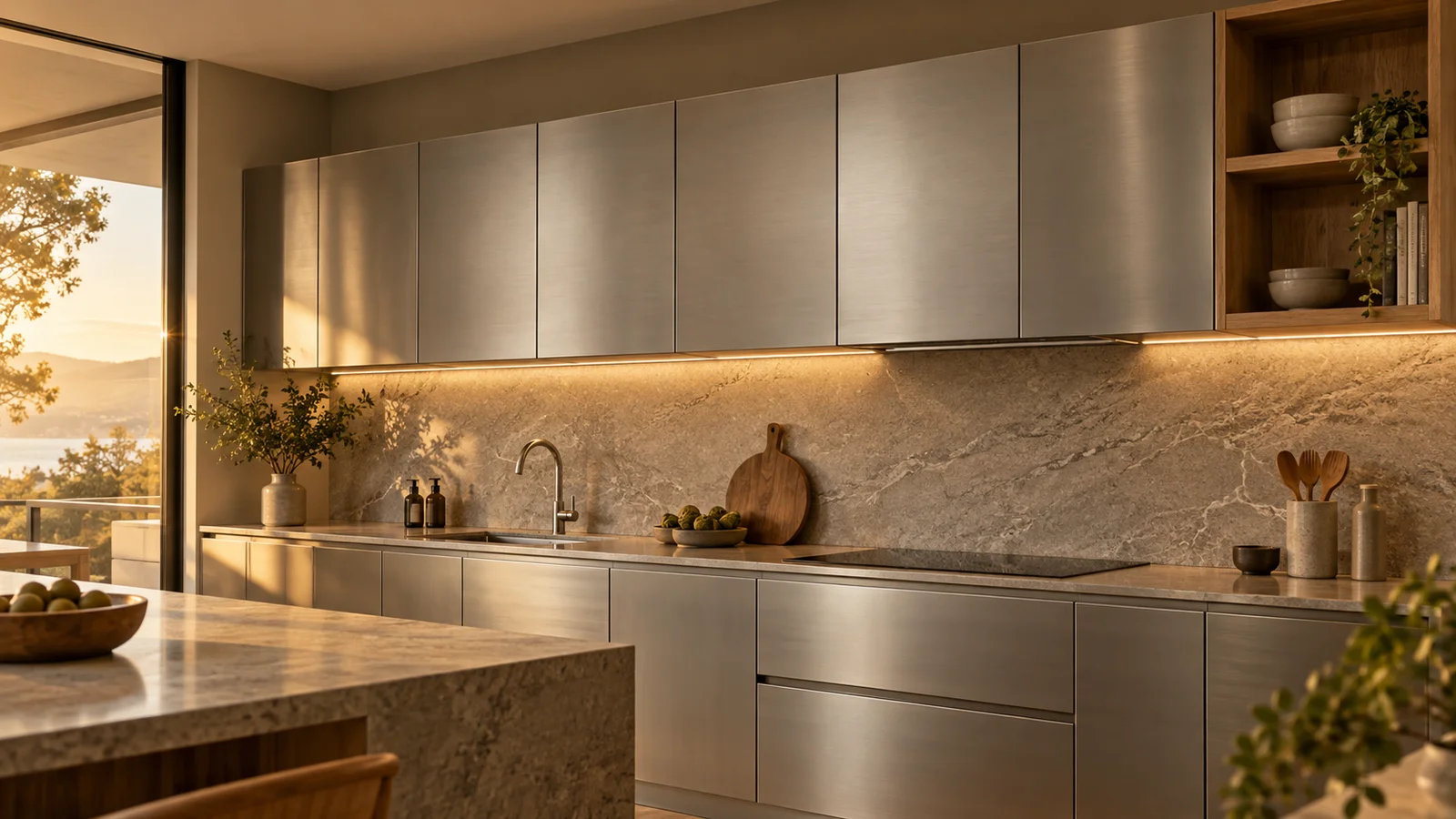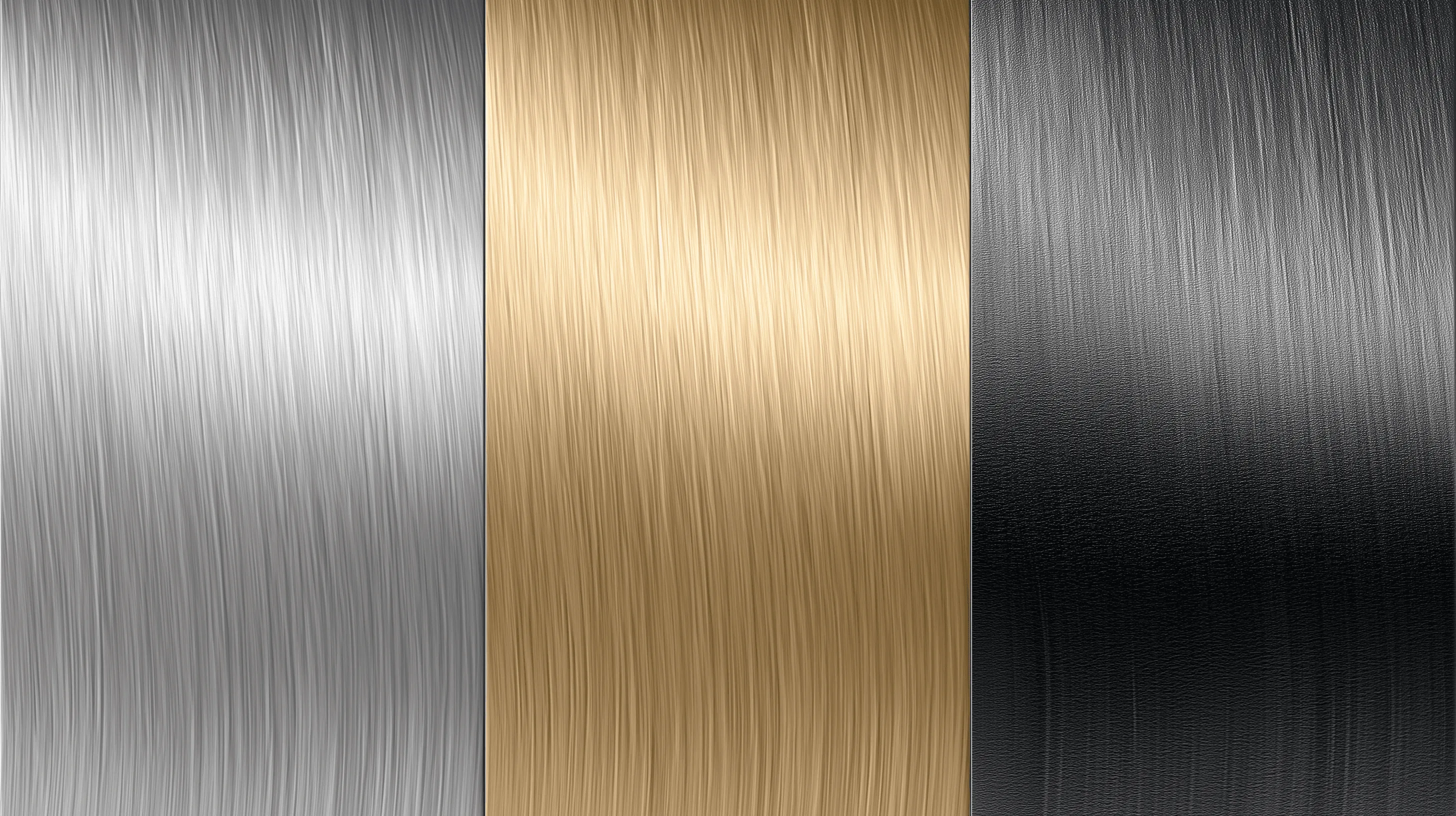
Matte describes a low-glare appearance; brushed describes a surface with a visible directional grain; satin usually describes a soft sheen. These terms can overlap. A brushed stainless steel cabinet may look satin rather than shiny, while a matte cabinet may have a mechanically finished metal surface or a coloured coating. Ask what creates the finish before comparing two samples.
For a cabinet order, the useful choice is a combination of appearance, surface treatment and care requirements. A finish name or a screen image alone is not an approval specification.
Matte vs satin vs brushed stainless steel
- Brushed: fine directional lines remain visible in the metal. Check the grain direction across adjacent doors and drawers.
- Satin: a soft reflective appearance. The name alone does not define one identical texture across every supplier.
- Matte: reduced glare. Confirm whether the sample is bare stainless steel with a mechanical finish or a coating over the steel.
- Mirror polished: a highly reflective surface. Check reflections in the intended room before using it over a large cabinet front.
The British Stainless Steel Association explains why finish names and grit numbers alone do not fully define a surface. Agree a physical sample as well as the written finish description. It is a clearer reference for grain, sheen and colour than asking only for “satin stainless”.
PVD colour and powder coating are different choices
PVD is a deposited surface coating used for metallic colour directions. Powder coating provides a different route to coloured surfaces. Neither name, on its own, establishes the steel grade, suitability for an exposed location or an agreed service life. The worldstainless surface-treatment guide separates mechanical finishes from colouring and coating processes.
For Zovia cabinetry, metallic and painted colour directions can be discussed against the project brief. Confirm the actual coating system, texture and availability for the selected cabinet before approving it. Do not treat a colour shown in a rendering as a guarantee that every cabinet component has the same finish.
Will a matte or brushed cabinet hide fingerprints and scratches?
Surface appearance changes how marks are seen, but “matte” is not a promise of fingerprint resistance or scratch resistance. Review a sample under both daylight and the planned artificial lighting. Inspect it straight on and at an angle, especially next to appliances, worktops and adjoining doors.
Ask for the cleaning instructions for that exact surface. A method suitable for bare brushed steel may be unsuitable for a coloured coating. Our stainless steel cabinet care guide and guide to cabinet scratches explain the questions to resolve before handover.
What to confirm before approving a finish sample
- Cabinet use and location: indoor kitchen, bathroom or outdoor kitchen; describe exposure to weather, salt air or pool chemicals where relevant.
- The complete surface description: substrate, coating or mechanical finish, colour reference, sheen and grain direction.
- Adjacent materials: compare against the intended worktop, appliances and handles under the same light.
- An approval reference: agree how the sample will be identified and how the selected finish will be recorded in the project documents.
- Care and replacement: clarify cleaning restrictions and how future replacement fronts would be matched.
Sample availability, cost and delivery are confirmed for each enquiry. Read how cabinet finish samples are reviewed before production for a fuller checklist.
See the finish on the cabinet you need
Browse stainless steel kitchen cabinets, wardrobes or outdoor kitchen cabinets to compare the relevant product direction. For a project review, send the cabinet type, preferred finish and site information. Include a drawing or reference image if available; the team can then identify what needs to be confirmed before quotation.