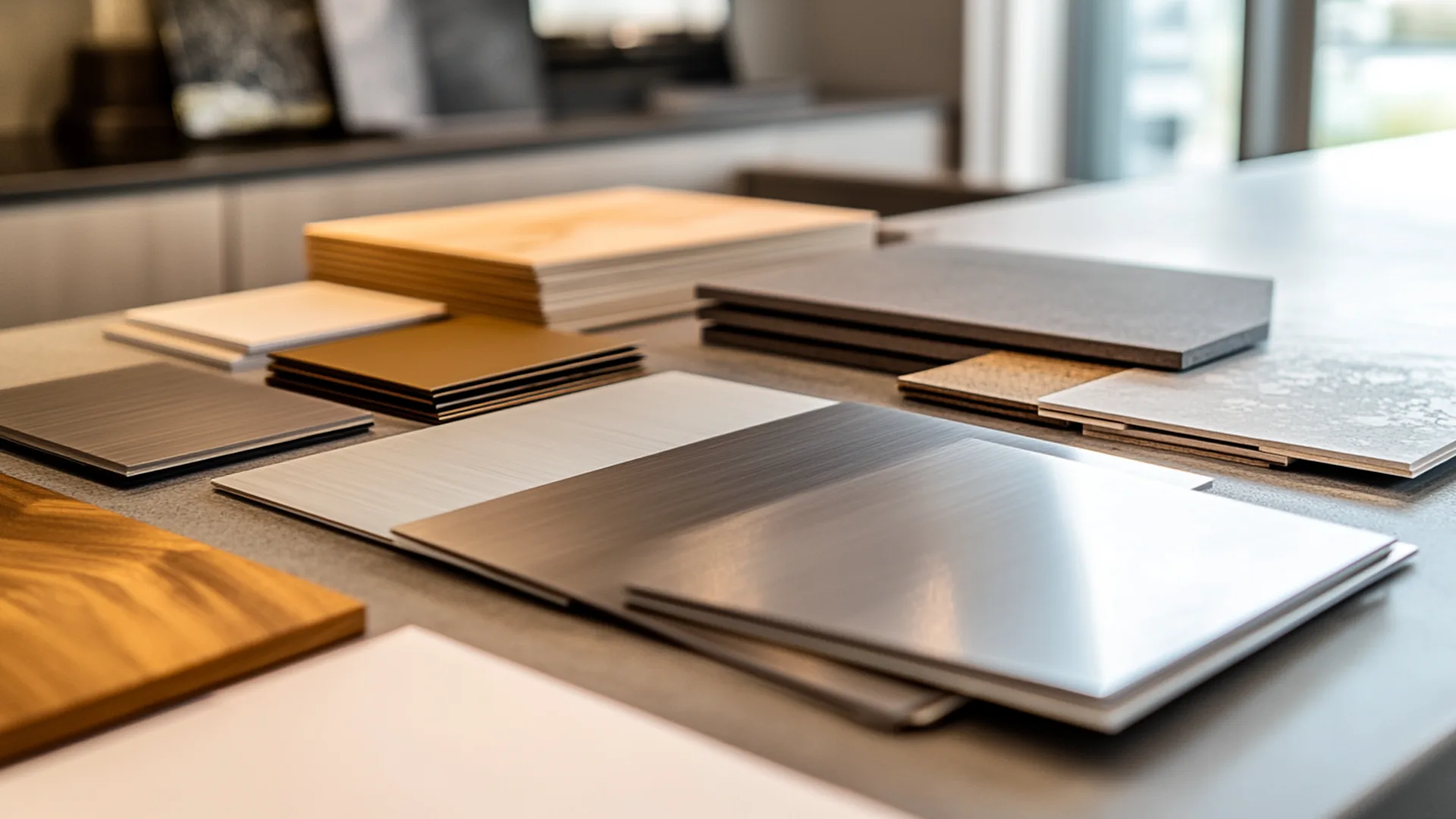
Finish samples can look like a small step in a custom cabinetry order. For overseas buyers, they are often the point where vague design language becomes something a factory, designer and local installation team can all check against. A phrase like “warm stainless” or “matte grey” is not enough once production starts.
The sample does not need to answer every technical question. It should control the visible decisions that are hardest to repair later: grain direction, color tone, sheen, edge treatment and how the surface behaves under real light.
Compare samples under the right light
A finish can change dramatically between cool daylight, showroom spotlights and warm residential lighting. Brushed stainless steel, PVD color and matte surfaces all reveal different marks, reflections and undertones depending on the angle. Review samples under lighting close to the final interior whenever possible, not only under a supplier’s desk lamp.
For kitchen and living spaces, 2700K to 3000K warm light often makes stainless steel feel softer beside wood, stone or neutral wall finishes. That does not make one finish universally correct; it simply gives the buyer a more honest view of how the approved sample will read after installation.
Check grain, tone and repeatability
Brushed stainless steel has direction. If one cabinet door runs horizontally and the next runs vertically by accident, the whole elevation can feel inconsistent. Ask whether visible panels, doors, fillers and worktop faces follow the same grain logic.
Color finishes need the same discipline. When PVD, powder coating or mixed materials are part of the brief, compare samples in a group rather than one by one. The buyer should know which surface is the approval reference, which surfaces are allowed to vary naturally and which differences would require a review before production continues.
Look closely at edges and corners
Flat sample panels are useful, but cabinetry is judged at transitions. Edges, folded returns, handle areas, corner details and junctions with stone or wood decide whether a finish feels controlled. A sample record should show more than the face color; it should also define how exposed edges are treated.
- Visible grain direction
- Approved finish name or sample code
- Edge and corner treatment
- Lighting condition used for approval
- Related drawing or cabinet code
A finish sample is not decoration; it is a shared reference for production decisions.
Keep the approval record traceable
Overseas orders become easier to manage when every approved sample connects to a drawing, revision date and cabinet scope. The Zovia product range can help define the cabinet type, while the factory process gives context for how material, fabrication and finish decisions move into production.
For custom kitchens, the sample should also relate to appliances, worktops, backsplashes and cleaning expectations. The custom kitchen cabinet page shows how those parts sit within one system. Send the finish direction, drawings and project setting together, and Zovia can discuss the sample as part of a controlled specification rather than a loose color preference.