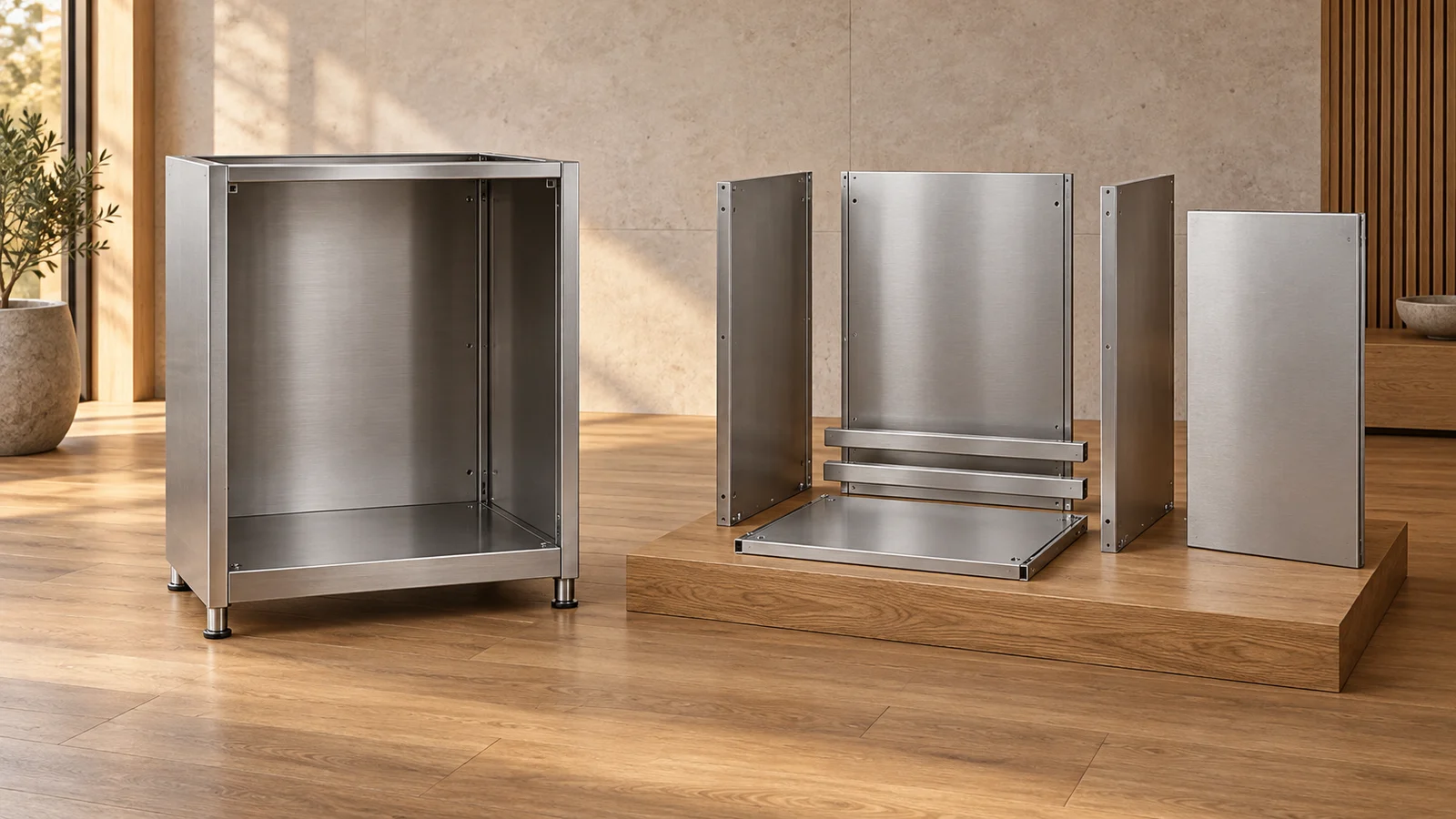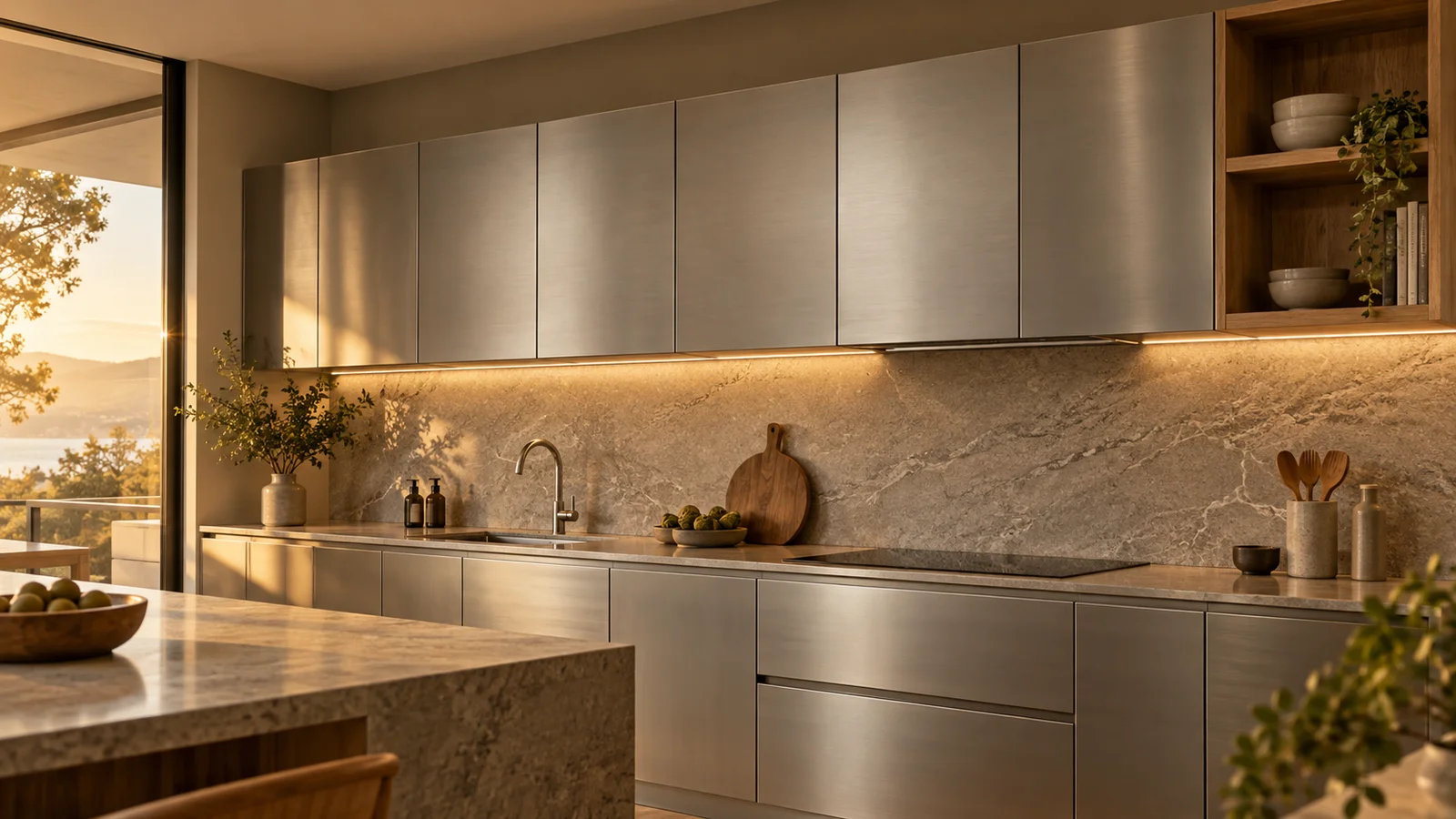
Most cabinets sold today are made from MDF, particleboard, or plywood with a laminate or veneer surface. They look good on day one and cost less up front. The question worth asking is how they compare over ten, twenty, or thirty years — and that is where stainless steel pulls ahead.
Moisture and humidity
Engineered wood is the enemy of moisture. Under sinks, near dishwashers, in humid climates, the board edges swell and the laminate lifts. Stainless steel is completely unaffected by water and steam — the single biggest reason it dominates professional kitchens.
Hygiene
A stainless surface is non-porous and seamless, giving bacteria, mould, and pests nowhere to settle. It is the same reason hospitals and commercial kitchens specify steel. Wood and laminate, by contrast, have porous edges and joints that can harbour grime over time.
- Water resistance — steel: unaffected; engineered wood: swells and delaminates
- Hygiene — steel: non-porous, wipe-clean; wood: porous edges and seams
- Pests — steel: nothing to eat or nest in; wood: vulnerable to insects
- Lifespan — steel: decades; laminate cabinetry: often replaced within 10–15 years
- Recyclability — steel: fully recyclable; composite board: difficult to recycle
Traditional cabinets are bought twice. Stainless steel is bought once.
The honest trade-offs
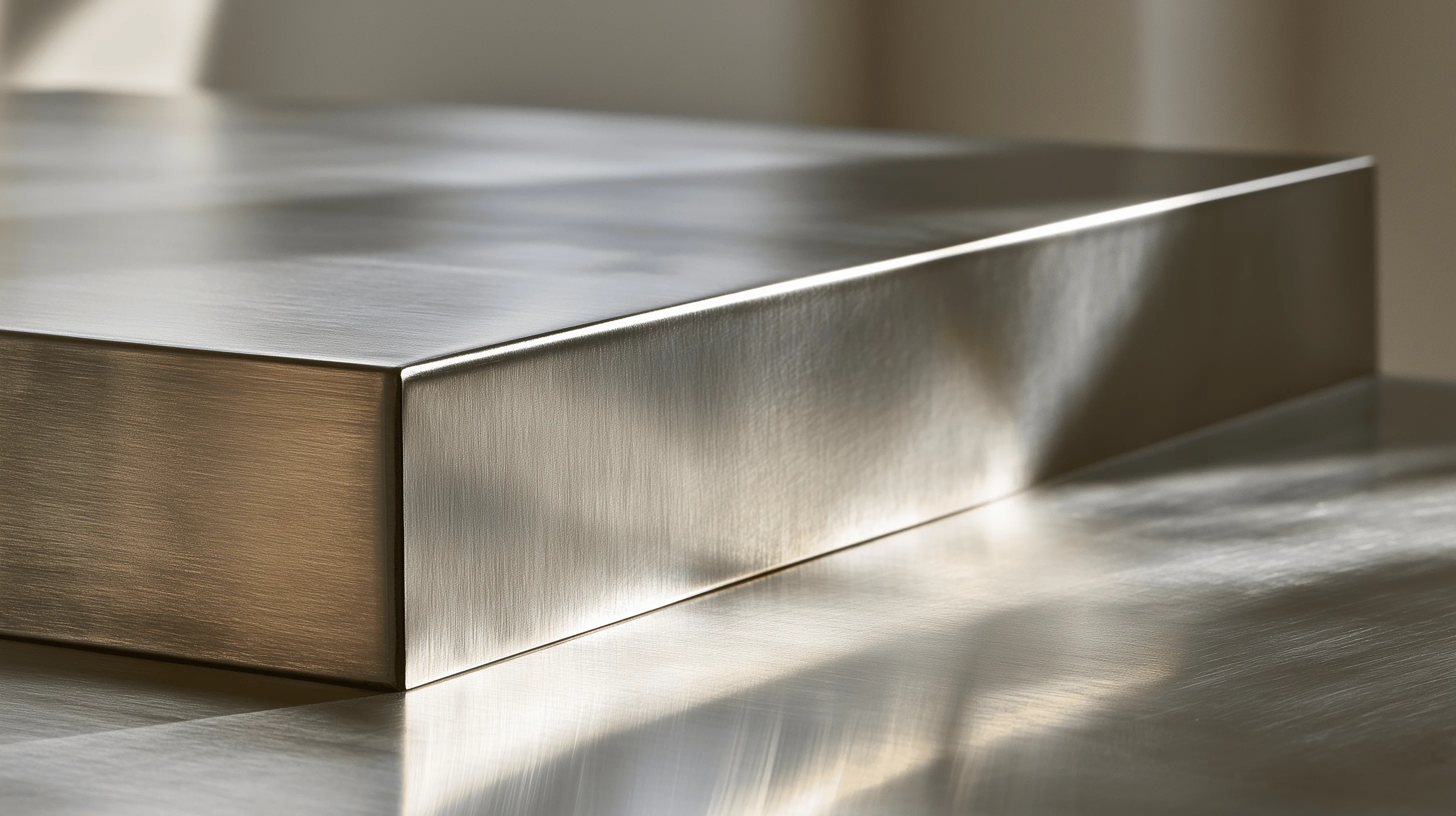
Stainless steel costs more initially and shows fingerprints on mirror finishes (which is why we favour brushed and PVD surfaces). It is a considered, long-term investment rather than the cheapest option on the shelf. But across a lifetime — no swelling, no rot, no replacement — it is very often the more economical choice.