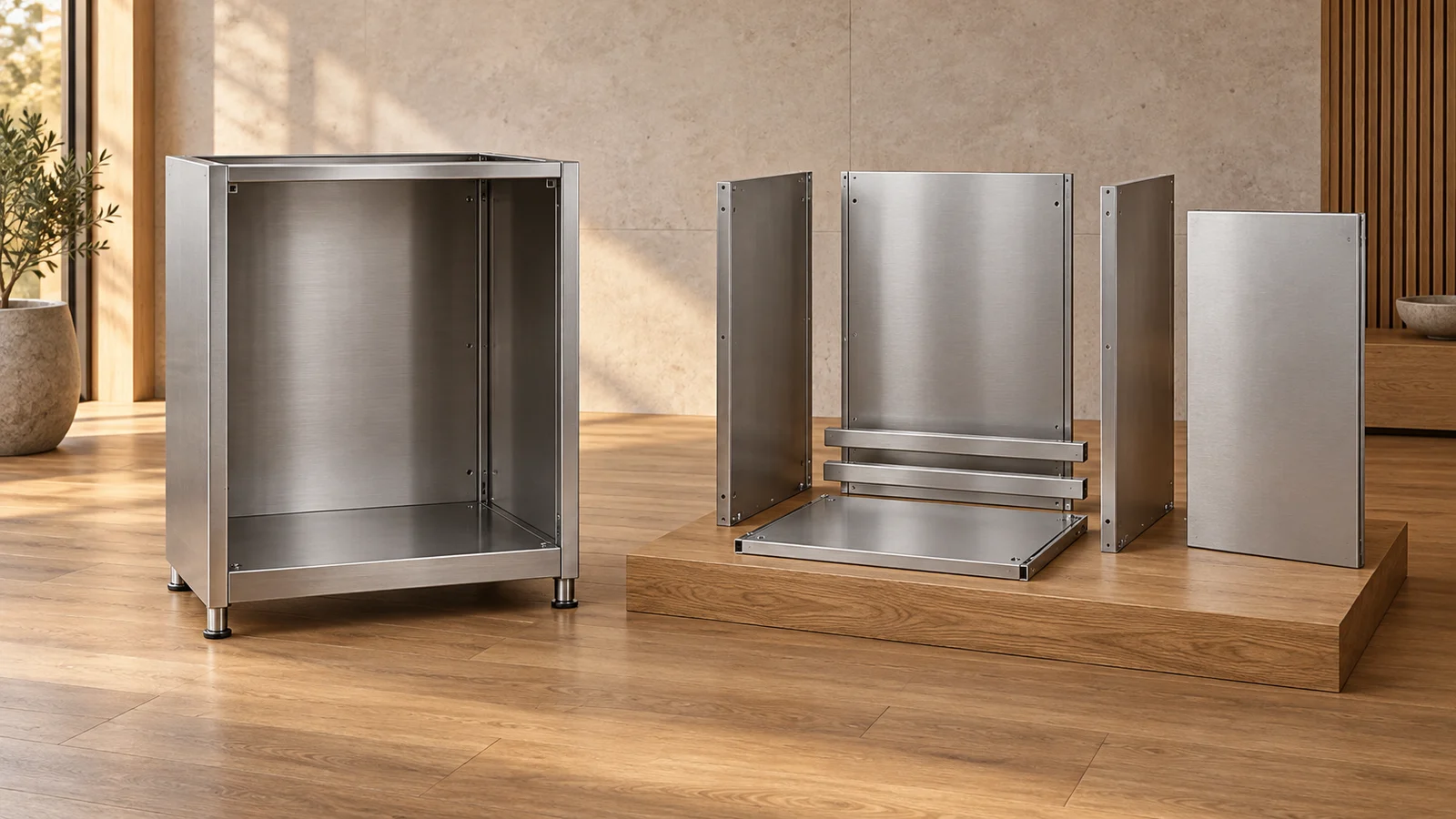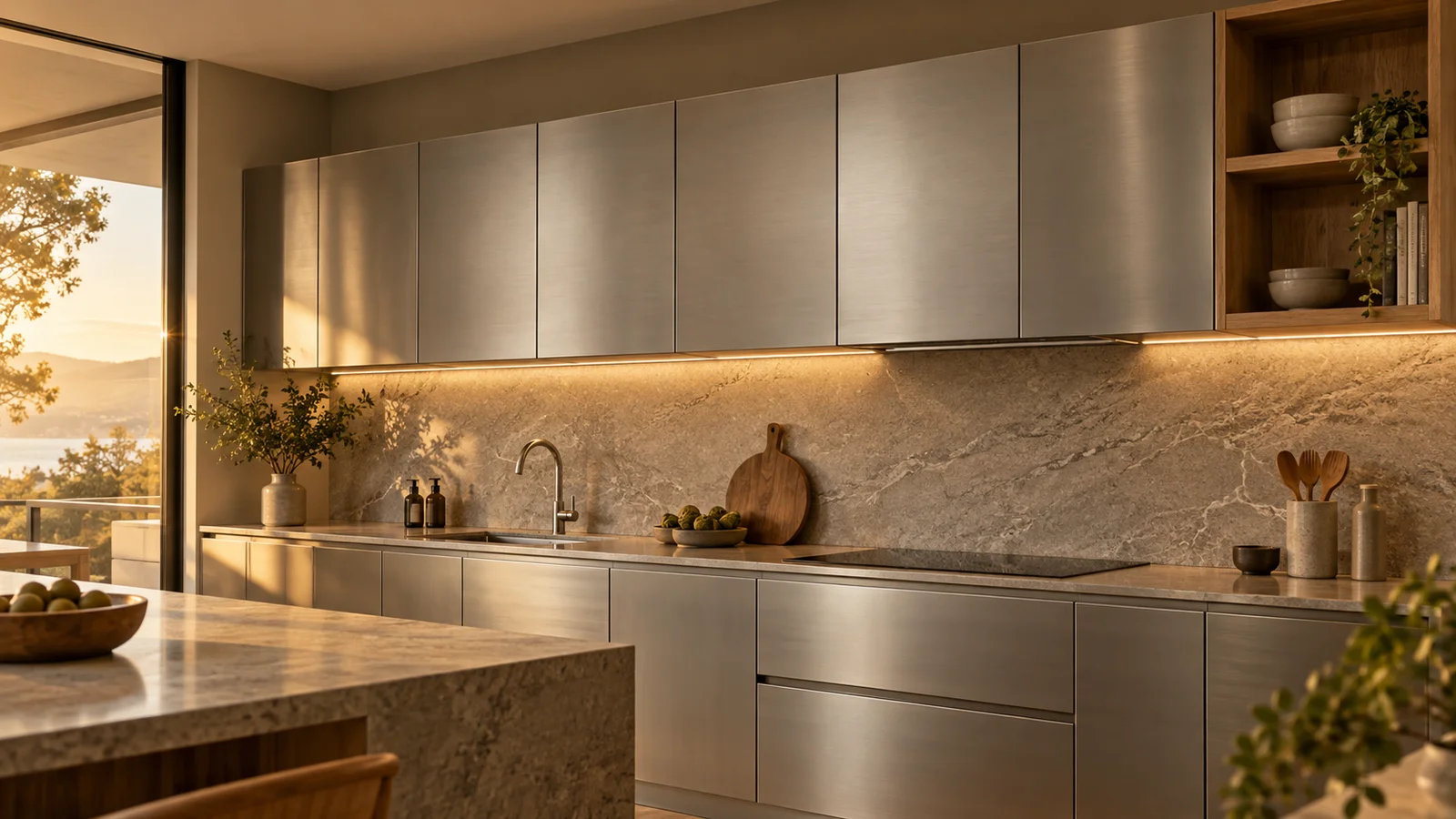
The cabinet base is easy to overlook in a render. Buyers focus on door style, worktop material and finish colour, while the lower line of the cabinet is treated as a background detail. In a real kitchen, that base detail is touched every day by shoes, mop water, floor dust and cleaning equipment.
For stainless steel cabinetry, the toe kick or plinth should be specified with the same care as the door front. It affects how close a person can stand to the counter, how the cabinet reads against the floor, and how easily the kitchen can be kept clean after installation.
Why toe kick geometry matters
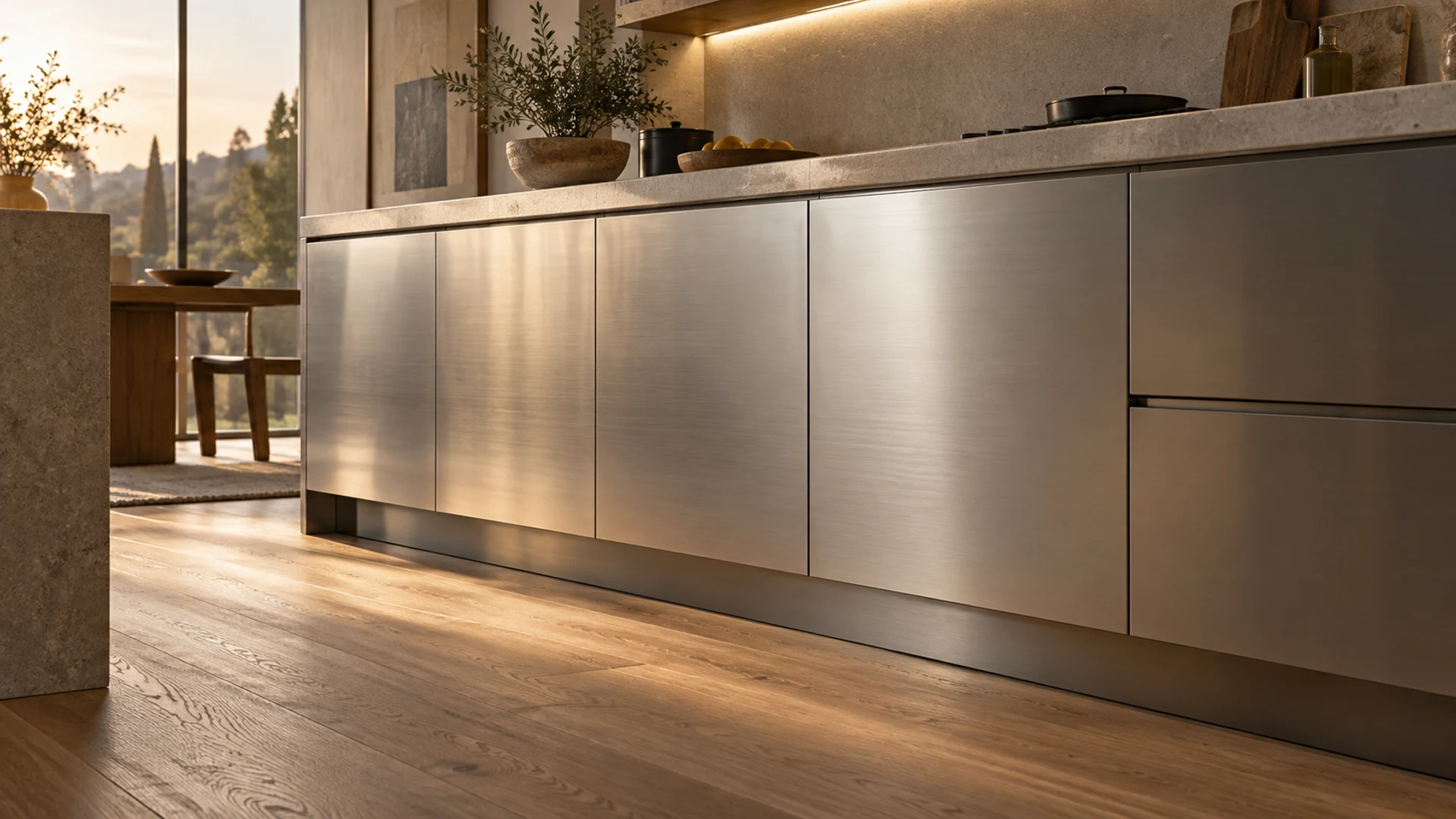
A recessed toe kick creates space for the user’s feet, allowing the body to stand closer to the worktop without leaning forward. This is especially important at long preparation runs, sink cabinets and island work zones where people stand for more than a few seconds.
The recess also changes the visual weight of the cabinet. A stainless steel base cabinet with no recess can look heavy, especially in a compact room. A clean shadow line at the plinth makes the cabinet feel more architectural and better integrated with warm flooring, stone and timber surfaces.
Recessed, flush or raised
There is no single correct base detail. A recessed stainless steel toe kick works well for kitchens and vanities where daily standing comfort matters. A flush plinth can suit display cabinetry, wardrobes or simpler storage runs where a clean vertical face is more important than foot clearance.
Raised legs or adjustable feet may be useful during installation, but they need a planned cover detail if the final look should be continuous. Overseas buyers should confirm whether the base will be exposed, recessed behind the door line, or covered by a removable plinth panel before approving drawings.
Cleaning and moisture at the floor line
The floor line is one of the hardest-working parts of a kitchen. Water from mopping, small spills, dust and food particles collect where the cabinet meets the floor. Stainless steel helps because it does not swell like timber board, but poor detailing can still trap dirt in unnecessary gaps.
The best toe kick is quiet: comfortable to stand at, easy to clean and almost invisible once the kitchen is in use.
For a custom kitchen cabinet project, buyers should review:
- Toe kick depth and height in the shop drawings
- Whether the plinth is fixed, removable or part of the cabinet body
- How the base meets uneven flooring after installation
- Finish direction and colour match between door fronts and base panels
What to confirm before production
Before production starts, ask for a clear elevation or section drawing of the cabinet base. The drawing should show the finished floor level, cabinet height, toe kick recess and visible plinth material. If appliances, sink runs or long islands are involved, check that the base line remains consistent across the whole run.
Zovia can help specify stainless steel cabinet bases for kitchens, bathrooms, wardrobes and indoor storage projects. Tell us how the cabinet will be used and what floor finish it will meet, and we will help align the base detail with the overall design.