Overseas cabinetry enquiries often begin with a simple question: can you make this? A better brief gets to the useful conversation faster. For stainless steel cabinets, the supplier needs to understand the room, the use case, the finish expectations and the parts that must coordinate with other trades.
A strong project brief does not need to be complicated. It should reduce guesswork before drawings, samples or quotations become detailed.
Start with the room and use
Share the project type first: private kitchen, outdoor cooking area, bathroom vanity, wardrobe, resort fit-out or another commercial space. The same stainless steel cabinet can be judged very differently in a humid bathroom, a coastal outdoor kitchen or a dry indoor kitchen.
Include the room dimensions, ceiling height, wall conditions, door openings and service locations. For a stainless steel kitchen cabinet layout, mark sinks, cooktops, refrigerators, ovens, dishwashers and any equipment that affects clearances. If the project is outside, describe exposure to rain, salt air, sun and ventilation so the material discussion starts in the right place.
Send drawings that remove assumptions
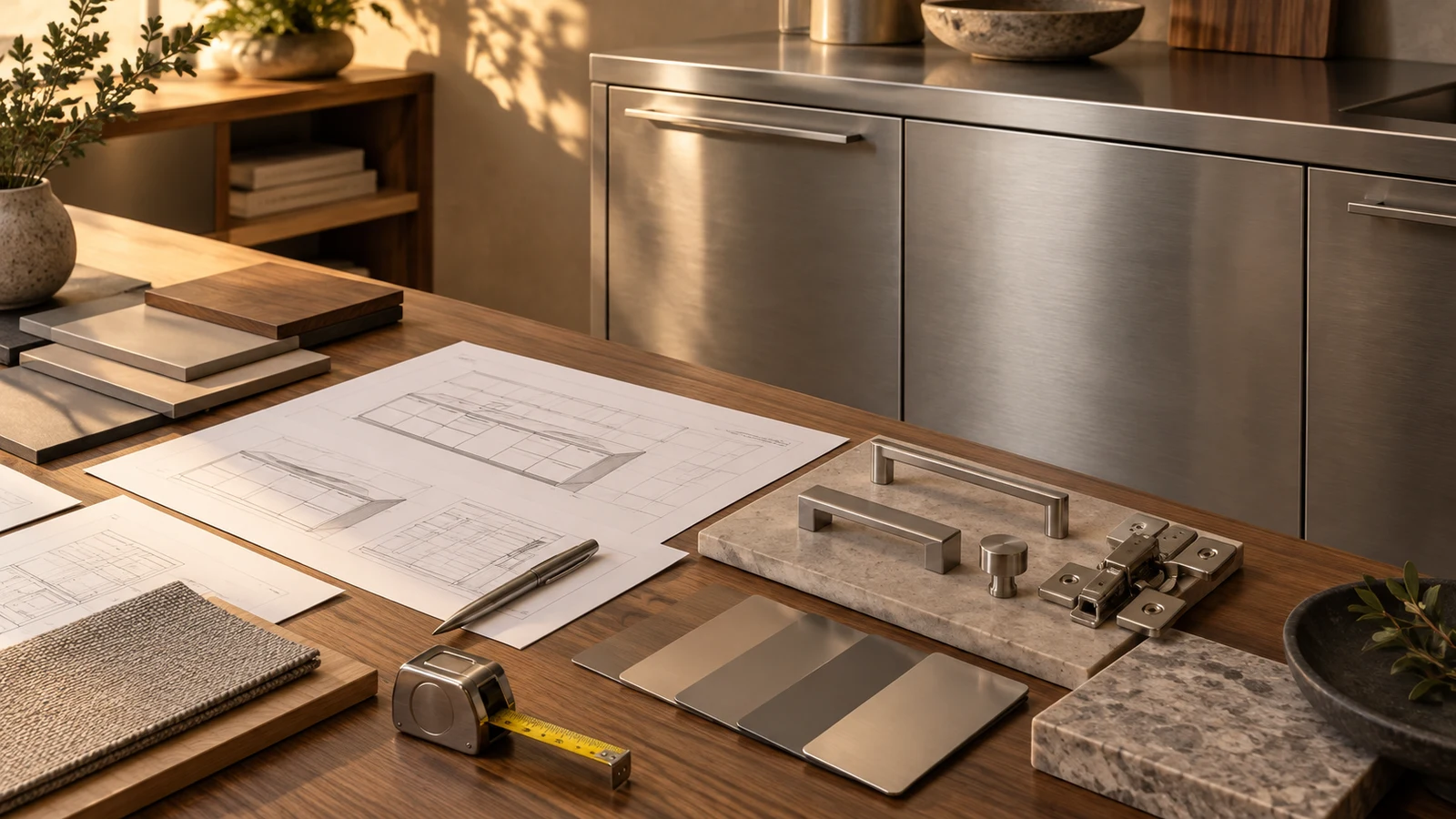
Plan views, elevations and site photos are more useful than inspiration images alone. Add the preferred unit widths, overall run lengths, countertop expectations and any fixed site constraints. If the dimensions are preliminary, label them as preliminary rather than letting everyone treat them as final.
For an outdoor kitchen cabinet order, identify the grill, sink, fridge or burner models that need to fit the cabinet run. Appliance cut-outs, gas routing, drainage and access panels should be coordinated from real product data, not from a mood board.
Define the visible details
Stainless steel cabinetry is precise, so small visible choices matter. Specify the finish direction, handle style, door reveal preference, toe-kick or leg approach, countertop interface and whether the design should feel more residential or more professional.
Useful approval items include:
- finish samples or reference finish photos
- handle and hinge preferences
- door and drawer layout expectations
- appliance and sink model information
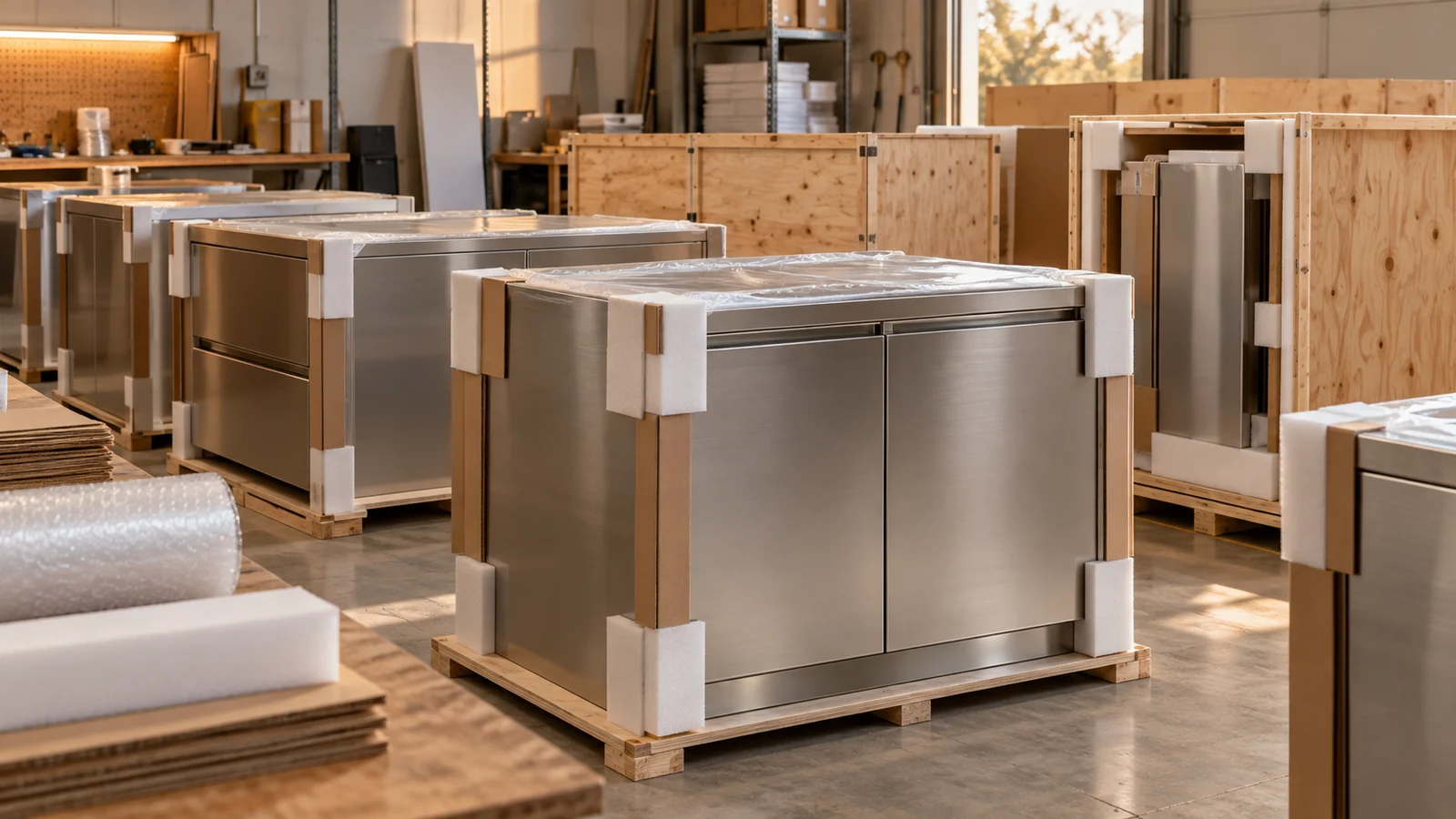
- packing or site access constraints
A good brief is not a final specification; it is a clean starting point for technical review.
Separate must-haves from preferences
Tell the supplier what cannot change and what can still be adjusted. Fixed appliance models, site openings, building restrictions and approved finishes should be treated differently from flexible drawer divisions or handle options.
This distinction helps the factory team recommend practical construction details without guessing which design choices are negotiable. It also keeps the review focused: drawings can be checked against the true constraints instead of chasing every possible variation.
Keep the discussion evidence-based
Avoid asking for a quote from a single image. Instead, send the brief, drawings, site notes and finish direction together. Ask what information is still missing before final technical drawings are prepared.
Zovia can review stainless steel cabinetry requirements across indoor and outdoor projects, then discuss the appropriate material, layout and production details against the actual brief. The more clearly the project starts, the fewer surprises remain when the cabinets move from concept to manufacturing.